
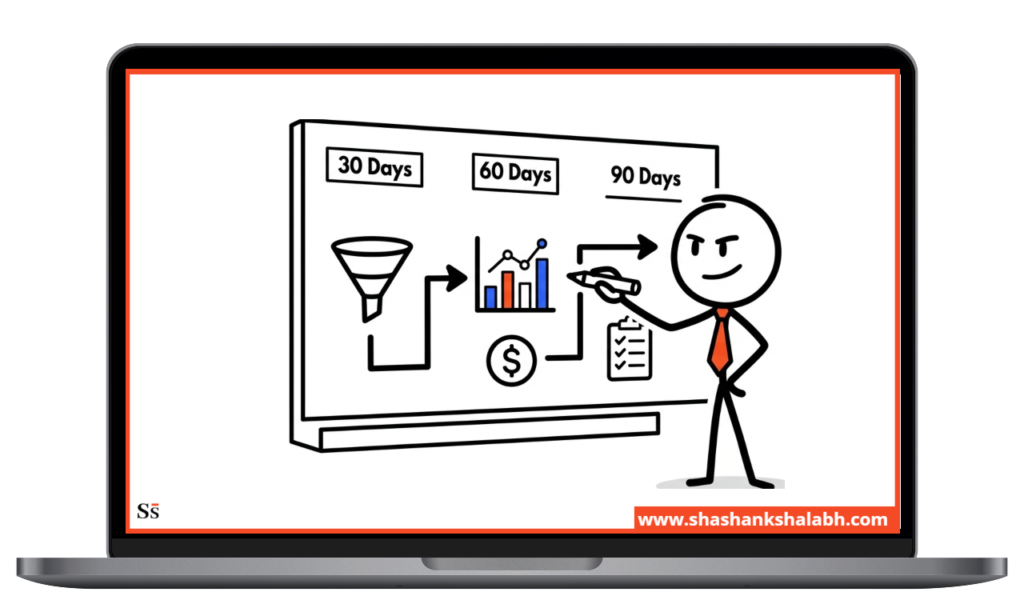
In the first 90 days, a fractional CMO audits current marketing performance, aligns strategy with revenue goals, builds a structured go-to-market plan, optimizes budget allocation, and establishes accountability systems.
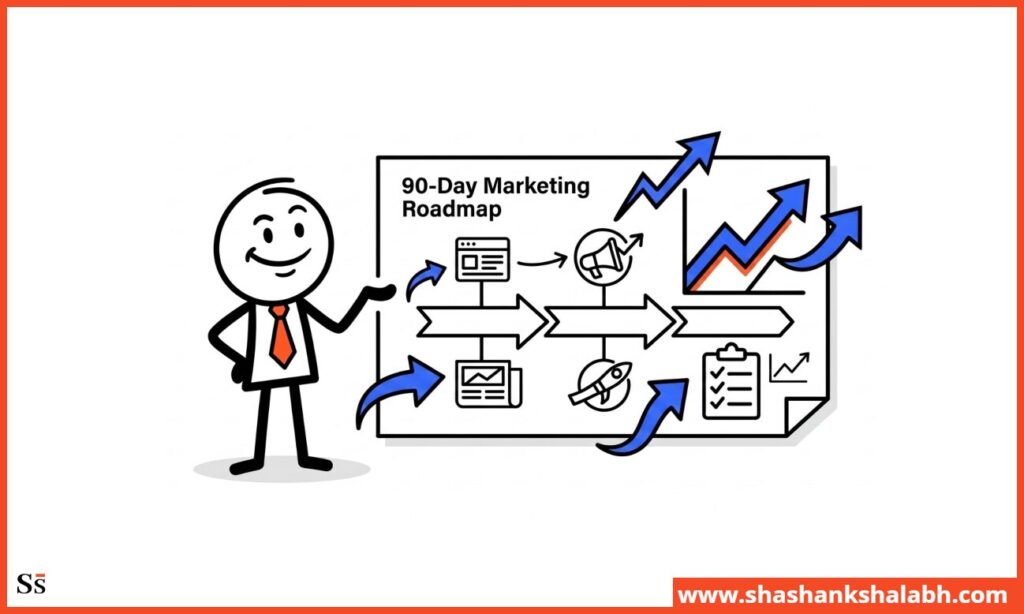
The fractional chief marketing officer engagement follows a structured three-phase approach. This ensures clarity, quick wins, and measurable progress toward revenue objectives.
Here are the three phases:
- Days 1-30: Assessment & strategic audit of current marketing, team, and revenue performance
- Days 31-60: Strategy development & cross-functional alignment on priorities and roadmap
- Days 61-90: Implementation & early wins demonstrating measurable progress and results
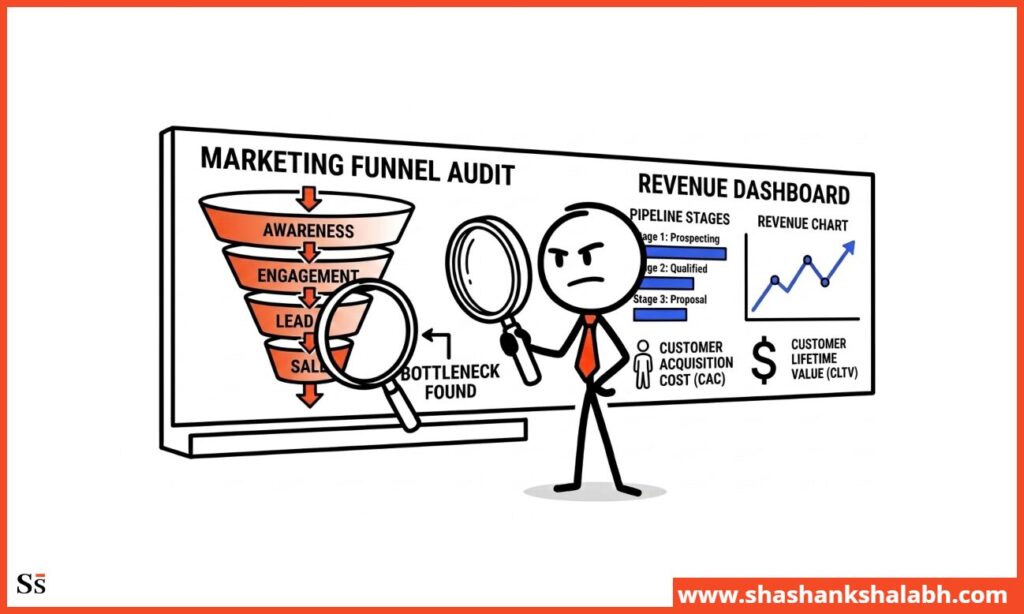
Days 1-30: Assessment & Strategic Audit
During the first 30 days, I focus on understanding what’s working, what’s broken, and where strategic opportunities exist.
Revenue & Pipeline Review
As a fractional chief marketing officer, I start by analyzing how marketing currently contributes to revenue.
I review closed-won deals from the past 12 months to identify patterns in customer acquisition. And examine the current pipeline coverage and conversion rates by stage. I identify which marketing activities actually drive revenue vs. those generating activity without outcomes.
Another key aspect of my work here is to analyze sales cycle length and bottlenecks impacting velocity. I also calculate the true customer acquisition cost across all channels and programs.
Outcome: Through these, I get a clear understanding of marketing’s current contribution to revenue and where efficiency gaps exist.
Go-To-Market Evaluation
As a fractional chief marketing officer, I assess your current positioning, messaging, and market approach.
The first thing I do is evaluate positioning clarity. Can prospects immediately understand your differentiation?
I review messaging consistency across the website, sales materials, and marketing campaigns. And analyze ideal customer profile definition and targeting precision. Next, I assess competitive differentiation and market positioning strength, and identify gaps between product capabilities and market communication
Outcome: Through the aforementioned process, I diagnose positioning strengths and weaknesses with specific improvement opportunities.
Marketing Budget Analysis
As a fractional CMO, I examine how marketing budget is allocated and whether spend aligns with results.
I map complete marketing spend including agencies, tools, advertising, events, and team costs. Next, I calculate ROI by channel showing which investments drive pipeline and revenue.
A key focus of mine is to find budget waste. This is the money being spent without measurable contribution to business outcomes. I assess budget allocation against industry benchmarks and growth stage appropriateness. And review forecasting and budget management processes
Outcome: Budget optimization recommendations showing where to increase, decrease, or reallocate spend for better ROI.
Check out marketing budgeting to understand this subject better.
Team Capability Assessment
I believe that evaluating marketing team structure, skills, and performance can be extremely productive.
That is why I assess individual team member capabilities, strengths, and development needs. And identify skill gaps preventing execution of necessary marketing functions. As a part-time CMO, I review team structure to see if roles align with strategic priorities.
I evaluate agency relationships and vendor performance; and assess team morale, clarity of direction, and accountability systems.
Outcome: I create a team development plan which covers hiring needs, training opportunities, and structural improvements.
Channel Performance Review
As a fractional CMO, I analyze which marketing channels drive results and which underperform.
I review performance data across paid advertising, content marketing, events, partnerships, and other channels, and calculate true channel economics including all costs (not just media spend).
I find high-performing channels (to allocate more budget), and flag underperforming channels (optimize/eliminate). Also, I assess attribution and measurement.
Outcome: Through these, I create a channel prioritization framework showing where to focus resources for maximum impact.
Deliverables by Day 30:
- Comprehensive marketing audit document
- Current state assessment presentation
- Priority opportunities and challenges identified
- Initial recommendations for strategic direction
Leadership interactions:
- Daily or every-other-day touchpoints with CEO during assessment
- Interviews with sales leadership, product leadership, and key team members
- Review sessions with marketing team to get their perspectives
- Board or investor context (if applicable)
Check out fractional CMO services to learn more.
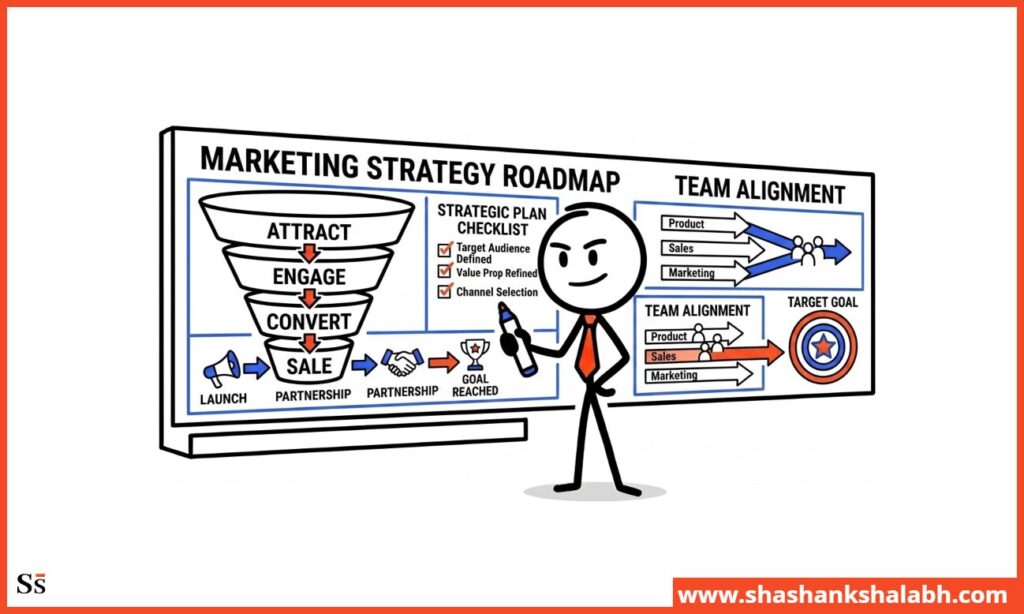
Days 31-60: Strategy Development & Alignment
The second phase of my fractional CMO work translates assessment insights into actionable strategy and secures organizational alignment.
Positioning & Messaging Refinement
During this phase, I develop or refine positioning that differentiates clearly in target markets.
I create a positioning framework to help understand why customers choose you vs. alternatives. For consistency across all touchpoints, I develop the core messaging hierarchy.
As an interim CMO, I build the value proposition tied to measurable customer outcomes, and create segment-specific positioning when serving multiple markets. It is important to validate resonance with target buyers. For that, I design a messaging testing plan:
Outcome: Positioning and messaging framework guiding all marketing communications and sales conversations.
Demand Generation Architecture
As a fractional CMO, I design systematic demand generation that creates a predictable pipeline.
How do I do this?
First, I build a multi-channel acquisition strategy appropriate for your customer buying process. And establish lead qualification frameworks so your sales focuses only on the highest-potential opportunities.
I create nurture programs to support your specific sales cycle length, and design conversion optimization roadmap addressing funnel bottlenecks. Next, I develop forecasting models enabling confident pipeline predictions.
Outcome: Demand generation blueprint showing how marketing will systematically create pipeline supporting revenue targets.
Sales & Marketing Alignment
I help build alignment between Marketing and Sales teams. This helps eliminate finger-pointing and creates shared accountability.
This includes facilitating alignment sessions with sales and marketing leadership. And having clear lead definitions, qualification criteria, and handoff processes. I establish service-level agreements (SLAs) for response times and follow-up, and create feedback loops ensuring sales informs marketing strategy.
I build shared dashboards connecting both functions to revenue outcomes.
Outcome: Sales-marketing alignment plan with documented processes, shared metrics, and accountability frameworks.
KPI & Reporting Framework
A business cannot grow without tracking the right metrics/KPIs.
I implement measurement showing marketing’s business impact.
First, I define the executive KPIs tied to pipeline and revenue. Note that these are not activity metrics. I build dashboard templates for weekly team review and monthly executive reporting.
I create an attribution methodology showing marketing contributions to closed deals. Also, I create forecasting framework to generate confident predictions.
Outcome: KPI dashboard and reporting cadence providing transparency on marketing performance against business objectives.
Growth Prioritization Roadmap
I create quarterly roadmap focusing resources on highest-impact initiatives.
As a fractional CMO, I prioritize initiatives based on revenue impact, resource requirements, and strategic importance. And build a 90-day tactical plan with clear milestones and accountability. I identify quick wins demonstrating early progress; and establish resource allocation across team, agencies, and budget.
I also create a decision framework for evaluating new opportunities
Outcome: Executable 90-day marketing plan with clear priorities, owners, and success metrics.
Deliverables by Day 60:
- Go-to-market strategy document
- Demand generation architecture
- KPI dashboard templates
- 90-day implementation roadmap
- Budget reallocation recommendations
Leadership interactions:
- Executive strategy presentation (60-90 minutes with CEO and leadership team)
- Board presentation (if scheduled)
- Weekly sync with CEO maintaining alignment
- Strategy sessions with cross-functional leaders (sales, product, operations)
For executive-level engagement details, see fractional chief marketing officer.
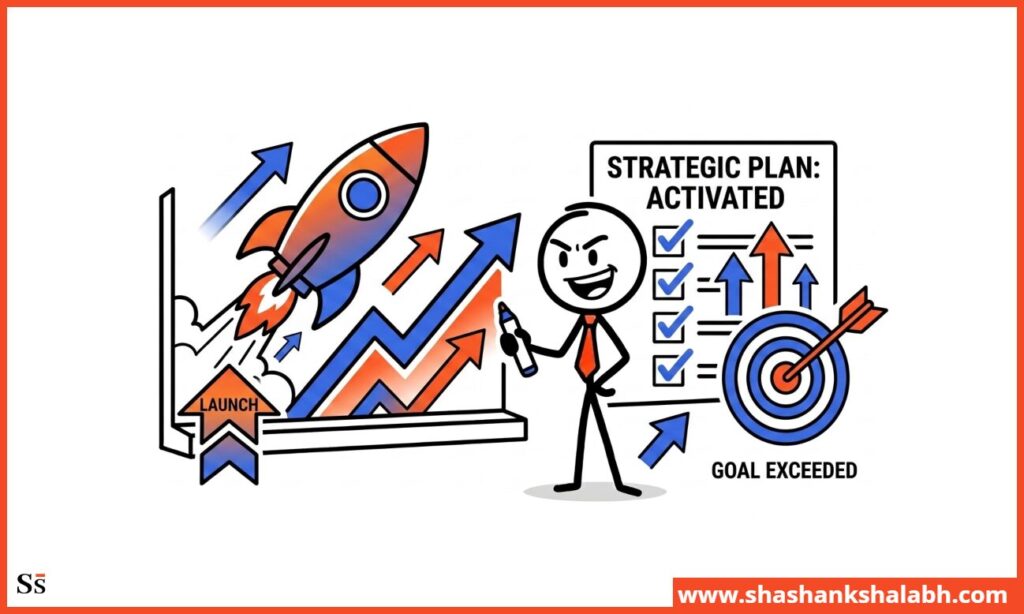
Days 61-90: Implementation & Early Wins
This third phase is about launching prioritized initiatives, and showing measurable progress.
Campaign Launches
As a fractional chief marketing officer, I oversee execution of highest-priority campaigns from the roadmap.
I launch refined messaging across the website, sales materials, and marketing channels. This phase also includes demand generation programs targeting priority customer segments. And launching quick-win campaigns addressing immediate pipeline needs.
I ensure that we implement conversion optimization tests improving funnel performance. And I coordinate cross-functional teams for aligned execution.
Outcome: Active campaigns in market with performance tracking against targets.
Budget Reallocation
In this phase, I shift resources from underperforming to high-ROI activities. This means reallocating budget based on channel performance analysis from Days 1-30, and reducing/eliminating spending on low-performing channels or vendors.
I increase investment in proven high-ROI channels, negotiate improved terms with agencies and vendors, and implement budget tracking.
Outcome: Optimized budget allocation driving better ROI and eliminating waste.
Team Restructuring (if needed)
People make or break the business. That is why I make team changes improving capability and performance.
As a fractional CMO, I kickstart the hiring processes for critical skill gaps identified in assessment. I clarify roles and responsibilities to eliminate confusion or overlap. This also includes performance management for underperforming team members.
I upgrade agency relationships or bring new partners where needed; and define team operating cadence with clear accountability.
Outcome: Marketing organization structured for execution with right capabilities in right roles.
Pipeline Acceleration
I focus on actions that quickly grow the sales pipeline.
I put lead generation tactics in place to fill short-term pipeline gaps, improve lead qualification and the handoff to sales to increase conversions, and launch targeted campaigns to close high-value late-stage opportunities.
As an interim CMO, I also remove friction from the conversion path to improve efficiency and set up pipeline tracking with early warning systems to spot risks early.
Outcome: Measurable pipeline improvement showing marketing’s revenue contribution.
Executive Reporting Cadence
I set up consistent communication with leadership.
This happens through weekly marketing team meetings to review progress and remove blockers, and bi-weekly or monthly updates with the CEO and leadership team.
I prepare board presentation materials, create standard reporting templates, and establish clear frameworks to guide decisions on priorities and resource allocation.
Outcome: Regular communication cadence for transparency, alignment, and fast decision-making.
Deliverables by Day 90:
- Active marketing campaigns
- Optimized budget allocation
- Initial results and performance metrics
- Refined team structure or hiring in progress
- Established reporting schedule and dashboards
Leadership interactions:
- Weekly CEO sync (30-60 minutes)
- Regular marketing team meetings (weekly)
- Monthly or bi-weekly executive updates
- Board presentation if quarterly meeting occurs during period
- On-demand strategic consultation as priorities emerge
For engagement structure options, explore fractional CMO engagement models.
What Results Should You Expect by Day 90?
By the end of 90 days, businesses see a strategic foundation with early measurable progress toward revenue goals.
As marketing initiatives mature and compound, revenue growth starts showing up.
Measurable outcomes by Day 90:
- Clear go-to-market roadmap: Documented strategy with priorities, timeline, and accountability eliminating ambiguity
- Defined revenue targets: Marketing goals tied directly to pipeline and revenue with forecasting models
- Structured marketing budget: Optimized allocation based on ROI with waste eliminated and high-performers funded
- Reporting dashboards: KPIs tracking marketing contribution to business outcomes with executive visibility
- Early pipeline improvements: Initial increase in qualified leads, improved conversion rates, or accelerated sales velocity (typically 10-25% improvement)
- Organizational alignment: Sales and marketing coordinated with shared definitions, processes, and metrics
- Team clarity: Roles, responsibilities, and priorities clear with improved morale and focus
Timeline expectations:
Campaigns typically deliver full revenue impact between months 4-8 as they mature. However, we gain strategic clarity and see early efficiency improvements within the first 90 days.

Common Misconceptions About the First 90 Days
It is important to understand what fractional CMO engagement is and isn’t.
It’s not just tactical execution:
The first 90 days prioritize strategic foundation over campaign volume.
Launching five mediocre campaigns helps less than establishing one clear positioning and demand generation system driving sustainable results. My approach of strategy before tactics ensures execution serves business objectives rather than generating activity for activity’s sake.
It’s not replacing your team:
As a fractional CMO, I provide executive leadership. I do not replace your team.
I work through your marketing team developing their capabilities, clarifying priorities, and improving performance. The goal is making your team more effective with strategic direction and accountability.
It’s not random campaign launching:
Every initiative launched during the first 90 days ties to strategic priorities identified during assessment.
No “trying things to see what works”. We only execute the highest-impact activities addressing diagnosed gaps and opportunities. Discipline over randomness creates predictable results.
It’s strategic leadership first:
The first 90 days establish strategic clarity, measurement systems, and organizational alignment. These foundational elements enable consistent execution generating compounding results over time.
Companies valuing strategy over immediate tactics achieve better long-term outcomes.
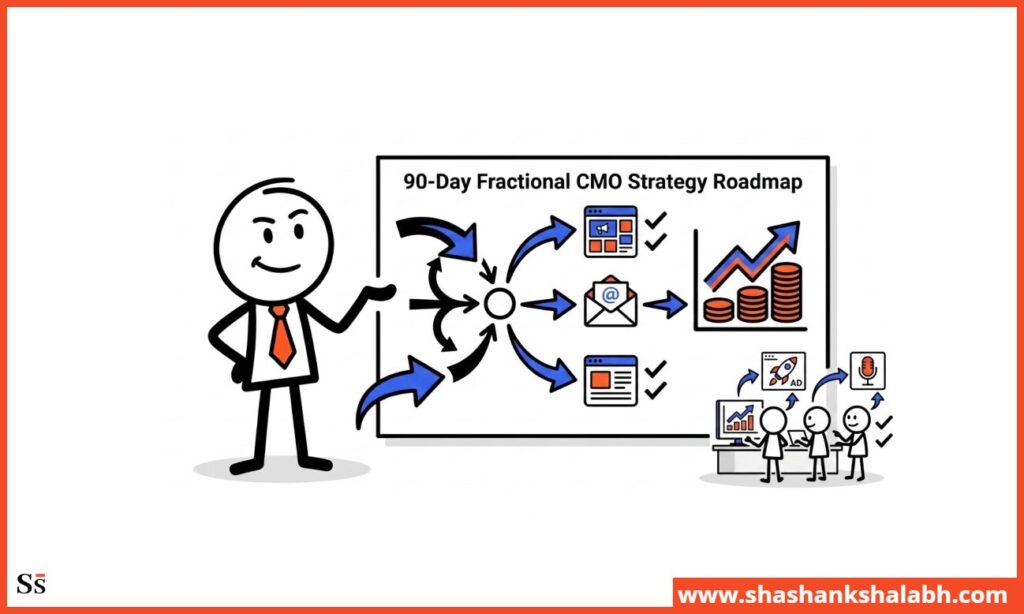
Fractional CMO vs Agency in First 90 Days
Here is a quick comparison between a fractional chief marketing officer and a marketing agency.
| Focus Area | Agency | Fractional CMO |
| Strategy | Limited (executes your strategy) | Executive-level (develops strategy) |
| Budget oversight | Rare (optimizes their channel only) | Direct (allocates across all marketing) |
| Team leadership | No (works parallel to your team) | Yes (leads and develops your team) |
| Revenue accountability | Low (reports on channel metrics) | High (owns pipeline and revenue targets) |
| First 90 days focus | Campaign execution and optimization | Assessment, strategy, alignment, systems |
| Decision authority | Recommendations requiring approval | Executive decisions with your input |
Why this matters:
Agencies optimize within their scope (paid ads, content, PR). A fractional CMO owns the entire marketing function with executive accountability for business outcomes.
In the first 90 days, agencies execute campaigns; a fractional CMO establishes the strategic foundation ensuring all execution serves revenue goals.
Check out our guide on fractional CMO vs Marketing Agency to learn more.
FAQ: What to expect from a fractional CMO in the first 90 days?
Here are a few questions to help you understand what to expect from a fractional CMO in the first 90 days.
How involved is a fractional CMO in the first 90 days?
During the first 90 days, a fractional CMO works 20-30 hours weekly compared to standard 16-24 hours monthly after ramp period. This additional work enables thorough assessment, strategy development, and relationship building.
As a fractional CMO, I conduct extensive stakeholder interviews, review historical data, facilitate alignment sessions, and establish foundational systems. After Day 90, my fractional CMO engagement goes back to the standard retainer cadence (2-3 days weekly).
Will a Fractional CMO replace my marketing team?
No. A fractional CMO does not replace the marketing team.
They lead the existing marketing team through strategic direction, coaching, and performance management.
As a fractional chief marketing officer, I guide hiring or agency decisions when I see skill gaps or underperformance. If you do not have a marketing team, I define the hiring plan and bring initial team members aboard.
How quickly should I see results with a fractional CMO?
The timeline varies by definition of “results.”
Most companies start seeing progress in the first 60 to 90 days. During this phase, I clarify the strategy, focus the budget on what actually works, and get the team aligned around one plan.
By around Day 90, the pipeline usually starts to improve. Many companies see a 10-25% lift in qualified opportunities or conversion rates once quick fixes and campaign improvements take hold. It takes 4-8 months to start seeing revenue impact. This is normal for B2B companies with 6 to 12 month sales cycles.
What if we already have a marketing strategy?
In the first 30 days, I assess the current strategy with an objective view.
If the strategy is strong, I do not rebuild it. I focus on improving execution, aligning the team, and creating clear accountability so the strategy actually delivers results.
In many cases, what looks like a strategy is really a collection of disconnected tactics. When that happens, I organize and refine what already exists into a clear, documented direction.
Even with a solid strategy, there are usually gaps. Common issues include weak measurement, inefficient budgets, poor sales and marketing alignment, or unclear team roles. The first 90 days focus on fixing these execution issues.
The goal of the assessment is simple. Keep what works. Improve what can be strengthened. Replace what is not delivering results. By the end of the first 90 days, the strategy is clear, measurable, and actionable.
Do you work with startups or PE-backed companies?
Yes. I work with venture backed startups, PE companies, and founder-led businesses.
For venture backed startups, usually post Series A and around $5M to $30M in revenue, my focus is building predictable demand generation and improving unit economics. That includes metrics like customer acquisition cost and LTV to CAC. The goal is to create marketing systems that support fast, sustainable growth.
For private equity backed companies, the work also focuses on EBITDA improvement, budget efficiency, and exit readiness. The first 90 days often include building reporting that clearly shows how marketing contributes to growth and enterprise value.
For founder led companies, the priority is often different. Marketing usually depends too much on the founder. Here, I focus on building a repeatable marketing system, strengthening the team, and putting measurement in place.
The overall structure stays the same in every case. Assess. Set strategy. Implement.
What changes are the priorities, metrics, and pace, based on the company’s ownership and growth goals.
How much time commitment is required from our team?
The first 90 days require real collaboration to get the best results.
The CEO typically spends about 4-6 hours per week. This includes short check ins during the assessment phase, a weekly sync, and a few strategy sessions. The marketing team usually spends 5-10 hours per week. This time goes toward interviews, strategy discussions, and coordinating execution. Sales leadership typically spends 2-4 hours per week to ensure strong alignment around leads, messaging, and pipeline feedback.
After the first 90 days, the time commitment usually drops to a simple weekly sync. Companies where leadership actively participates in the first 90 days see stronger results. This work is most effective as a partnership, not a fully hands off delegation.
What happens after the first 90 days?
After the first 90 days, the focus shifts from building the foundation to guiding execution and improving performance.
The engagement moves to a steady cadence of 16-24 hours per month. I continue to lead strategy, support the marketing team, and track performance.
We typically maintain:
- A weekly CEO sync
- Regular marketing team meetings
- Monthly executive updates
- Quarterly strategic planning
The initiatives launched in the first 90 days continue to run, improve, and scale based on performance. Many companies keep the relationship for 12-18 months to maintain consistent strategic leadership. Others eventually hire a full time CMO once the company reaches the right scale.
Every engagement includes a 30 day exit clause, so there is flexibility if priorities change.
Ready to Understand How This Would Work for Your Company?
If you’re evaluating executive marketing leadership, understanding the first 90 days is critical to making the right decision with confidence.
Apply For A Strategy Call to discuss:
- Your current marketing situation and strategic challenges
- How the three-phase approach would apply to your specific needs
- Expected timeline for results given your sales cycle and market
- Whether fractional CMO engagement fits your stage and objectives
I’ll honestly assess whether this engagement model makes sense for your circumstances or recommend alternatives if other approaches better serve your situation.