
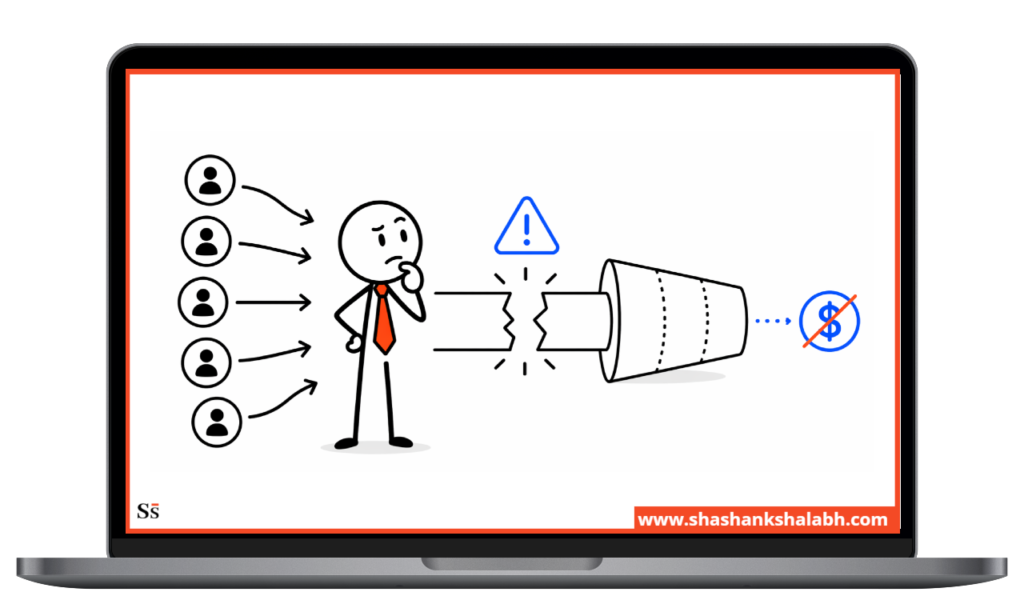
Lead generation and pipeline creation are not the same thing.
Many B2B companies get this wrong, and it shows up fast in the numbers.
Marketing reports record MQLs, but pipeline and revenue stay flat.
In this post, I break down the seven most common reasons leads fail to convert to pipeline. You’ll learn how to diagnose which one is breaking your system, and what to fix first.
Here’s what you’ll learn:
- Lead generation vs Pipeline, and why it matters for revenue
- The seven reasons leads fail to convert into real sales opportunities
- A simple five-minute diagnostic to pinpoint where your funnel is breaking
- What to fix first and in what order
- What a healthy lead-to-pipeline system looks like
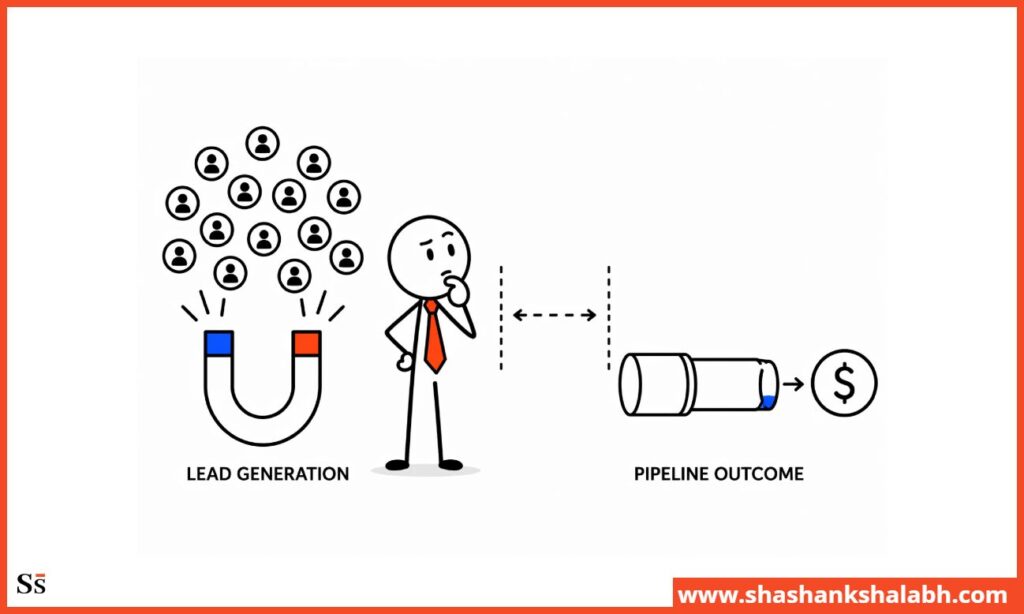
Lead Generation vs Pipeline: Why They’re Not the Same Thing
In several B2B settings, lead generation and marketing performance are considered the same.
As I wrote earlier, leads and pipeline are not the same. That is why optimizing one doesn’t automatically improve the other.
What Lead Generation Actually Measures
Lead generation measures volume.
It counts people who show interest. For example, fill out a form, download a guide, attend a webinar, or click an ad.
A marketing-qualified lead (MQL) is a lead that meets a set threshold, usually based on behavior and basic qualification.
MQLs are an activity metric. They show how much attention you’re generating. MQLs don’t tell how much revenue you’re creating.
You can hit a record MQL month and still miss your number. High lead volume doesn’t mean those leads will convert into pipeline or revenue.
What Pipeline Actually Measures
Pipeline measures revenue potential.
A qualified opportunity in the pipeline has confirmed budget, authority, need, and timeline.
It’s been reviewed by sales, discussed with the buyer, and qualified against real criteria such as budget, authority, need, and timeline.
Pipeline is a revenue metric. It shows what the business can realistically close.
Here’s the difference. MQLs are created by systems. Pipeline is created by people.
An opportunity only exists when a salesperson looks at a lead and decides it’s real. That decision is the filter that turns interest into revenue potential.
The Gap Between the Two and Why It’s Invisible
Marketing reports on leads. Sales reports on pipeline. Nobody owns the gap between them.
That gap, aka, MQL-to-SQL conversion rate, measures what percentage of marketing-qualified leads become sales-qualified leads worth pursuing.
I have seen businesses ignoring this metric. Organizations that track this metric often find it’s under 10%.
When MQL-to-SQL conversion is under 10%, one of two things is true.
Either marketing is generating the wrong leads, or the handoff between marketing and sales is so broken that qualified leads are dying in transit. In most cases, both are true simultaneously.
That gap is where growth dies. And because marketing is looking at MQL volume and sales is looking at pipeline, neither team sees it clearly.
The 7 Reasons Lead Gen Isn’t Turning Into Pipeline
Let’s talk about the main reasons why your leads don’t convert. And use the diagnostic section to identify the primary breakdown first.
Your ICP Is Too Broad
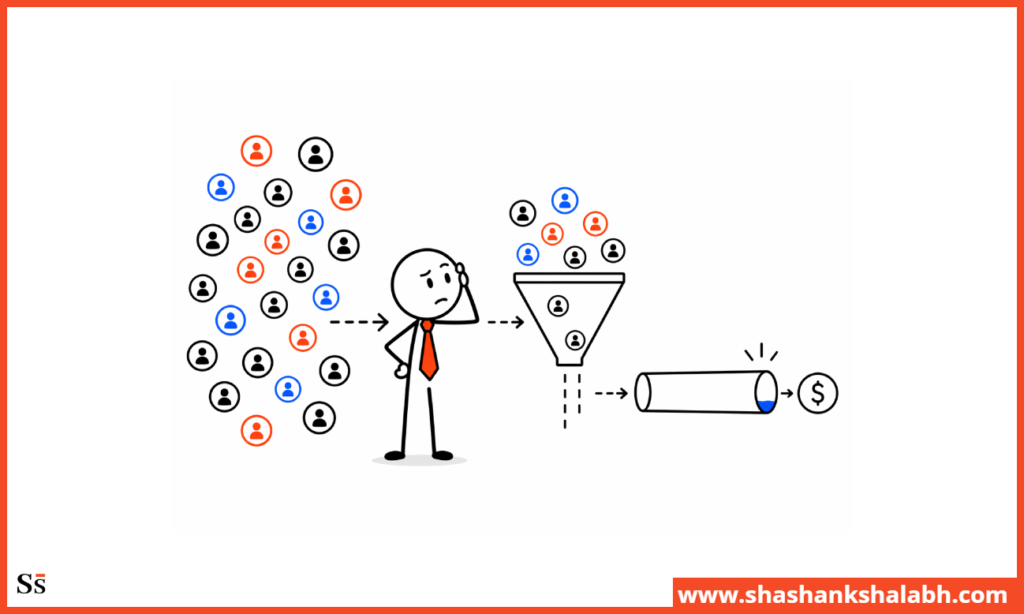
When the ICP is too broad, lead generation brings in volume but the wrong companies.
These leads may show interest, but they do not fit the business.
If they are not a fit for the ICP, they will not turn into a pipeline.
No amount of nurture or follow up will change that.
What does this look like in practice?
- High MQL volume with low SQL conversion
- Sales consistently challenges lead quality
- Pipeline reviews turn into repeated questions about whether leads were qualified at all
What’s happening underneath?
The ICP was built around who the company wants to sell to, not who actually buys.
This is one of the most common mistakes. Teams define an “ideal” customer based on intent or ambition instead of reality.
A real ICP comes from closed won data. It is based on customers who converted quickly, paid reliably, and stayed.
That’s a different list than the aspirational target market.
How to fix this?
Rebuild the ICP from closed-won analysis. Pull the last 20-30 closed-won customers.
Identify the firmographic patterns such as company size, revenue range, industry, funding stage, tech stack, organizational structure.
That’s your ICP. Target that profile specifically.
For more on ICP-first GTM strategy, check out Go-To-Market Strategy for Scaling Companies
Your MQL Definition Is Broken
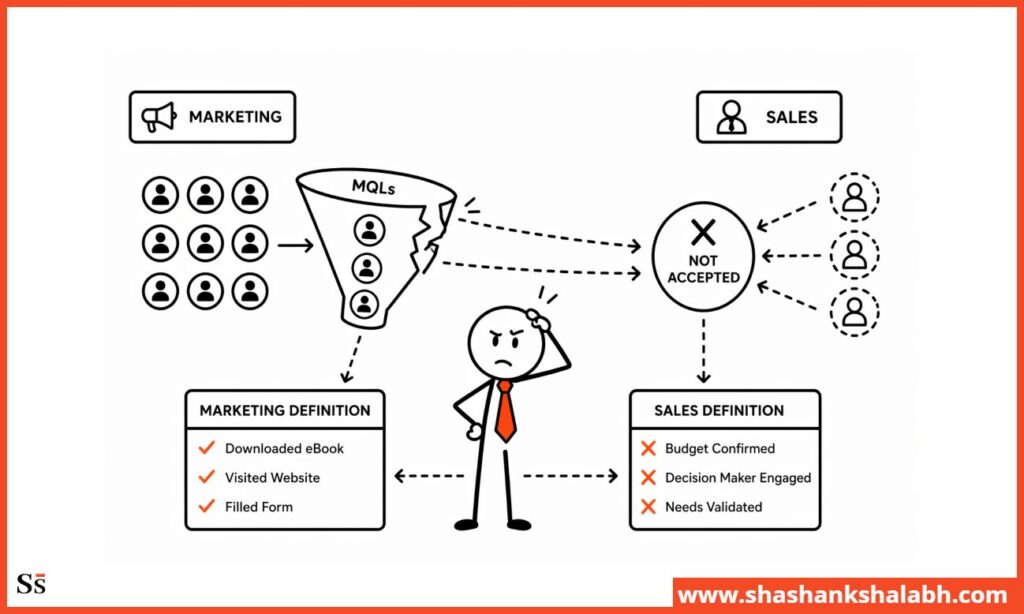
MQL definitions built only on behavior predict engagement, but not sales readiness.
And engagement is not the same as buying intent.
A prospect who downloaded your guide at 2am might be a researcher, a competitor, a student, or someone who will never buy.
The behavioral signal tells you they interacted with content. It tells you nothing about whether they’re a fit, have a budget, or are in a buying process.
What does this look like in practice?
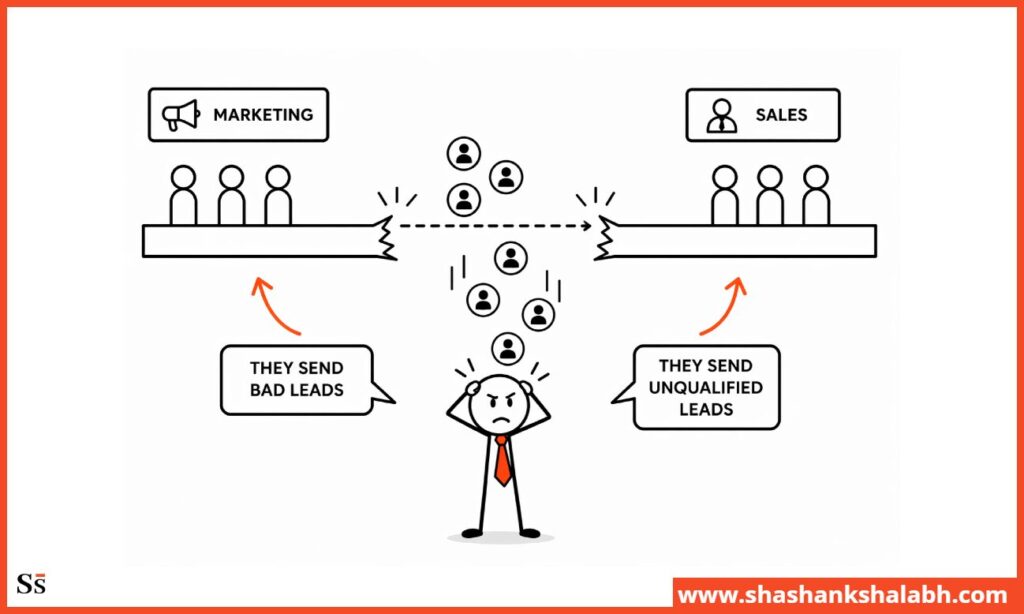
Marketing is consistently hitting MQL targets and Sales is consistently ignoring the leads. The disconnect is that the leads aren’t qualified in the way sales defines qualified.
What’s happening underneath?
Marketing built the MQL definition alone, based on what can be tracked, not what sales needs to start a real conversation. The result is a definition marketing can optimize for, but sales cannot use.
How to fix this?
Marketing and sales need to define MQL together.
It should include two things. First, firmographic fit, meaning the prospect matches the ICP. Second, behavioral intent, meaning they have shown enough engagement to suggest real interest. Both need to be present.
Firmographic fit without engagement is a cold target. Engagement without fit is a waste of sales time.
The right MQL definition is built jointly. Not by marketing alone.
The Handoff Is Broken
Most lead to pipeline failures happen at the handoff between marketing and sales.
This is the moment when a lead is passed over as “qualified,” but no one acts on it quickly enough.
Response time has a direct impact on conversion. The longer a lead sits without contact, the lower the chance it will convert.
In most B2B sales cycles, that drop happens fast, often within the first 24 to 48 hours.
What does this look like in practice?
You have leads flowing in, but no one is following up. Marketing and Sales blame each other.
What’s happening underneath?
There is no clear handoff process.
Marketing passes leads into the CRM. Sales gets to them when they have time, not when the lead is still warm.
By the time someone reaches out, the lead has already gone cold. The same pattern repeats every month.
How to fix this?
Define a handoff SLA.
First, define what marketing passes to sales at the point of handoff. This should include an ICP fit score, a short summary of engagement, and a recommended outreach approach.
Second, define what sales commits to doing. Set clear follow up timeframes. For example, within 24 hours for high fit leads and within 48 hours for standard leads.
Third, define what happens when a lead is not qualified. Sales logs the disqualification reason in the CRM, and marketing reviews that data to improve targeting and lead quality.
This agreement should be written down, agreed by both teams, and reviewed every month.
Without it, leads enter the system with no clear ownership. And that is where they get lost.
Sales Doesn’t Trust Marketing Leads
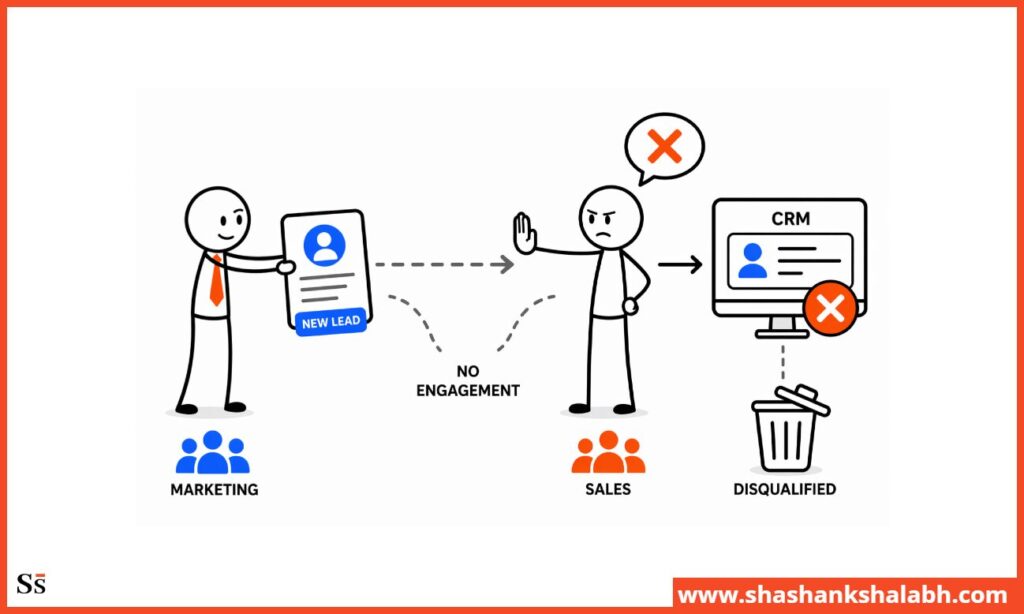
If Sales have been burned by low-quality leads in the past (and most sales teams have), they stop prioritizing marketing leads. Instead, they focus on their own sourcing and warmer opportunities.
From their perspective, it is rational. Why spend time on prospects that consistently do not meet their qualification standard?
But this creates a cycle that reinforces itself. Sales ignores the leads. The leads do not convert. Marketing’s performance looks weak. Sales sees more proof that the leads are not worth their time.
The system keeps validating its own breakdown.
What does this look like in practice?
MQLs are being marked as disqualified in the CRM without contact attempted. The disqualification reason is “not interested” or “wrong fit” even though no conversation ever took place.
What’s happening underneath?
The trust gap is real, and it did not appear overnight.
It was built over months or years of leads that did not convert.
How to fix this?
Run a joint weekly pipeline review with marketing and sales in the same room, looking at the same data.
Marketing reviews the leads generated, along with ICP fit scores and engagement signals.
Sales reviews what converted into SQLs, and why. They also review what was disqualified, and the reasons behind it.
Those disqualification reasons are then used by marketing to refine targeting and improve lead quality.
Trust is rebuilt through shared accountability.
Your Positioning Doesn’t Match the Buyer’s Problem
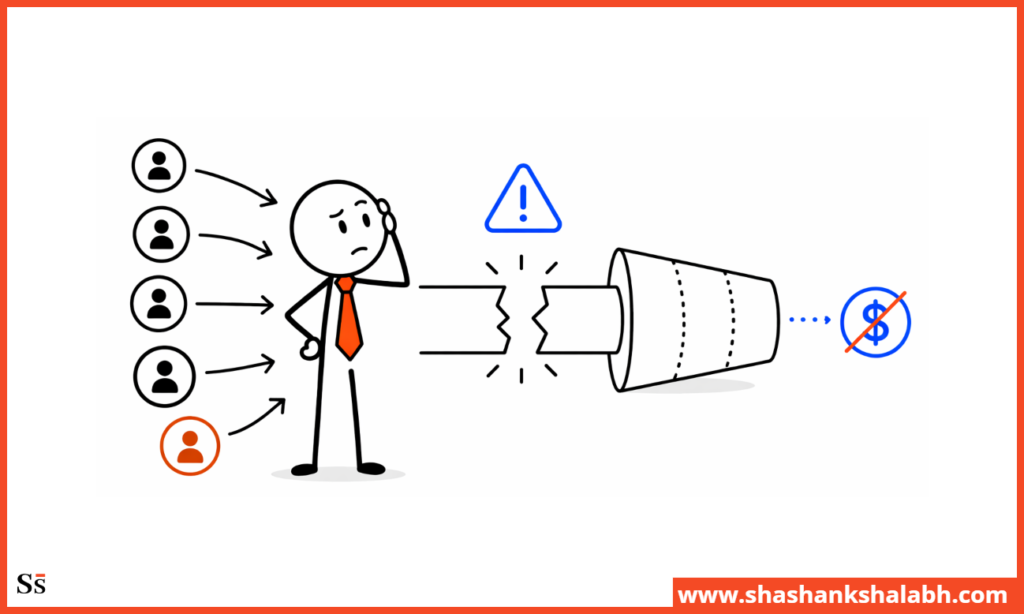
Leads are entering the funnel but leaving before or shortly after the first sales conversation. They engaged with content, expressed interest, and then went dark.
While you may think of this as a nurture issue, the real culprit is positioning.
The messaging that attracted the lead promised something different from what the sales conversation delivered.
The prospect thought the company solved one problem. The sales conversation revealed it solves a different one, or the same one differently than expected. The mismatch creates disengagement.
What does this look like in practice?
Strong early engagement, aka, good open rates, good click-through, and decent MQL volume. Then sharp drop-off at first contact or after demo. Prospects engage early and ghost after the first real conversation.
What’s happening underneath?
The lead gen message and the sales message are out of sync. This usually happens when marketing writes lead gen copy based on what attracts clicks. And sales has a different, more specific conversation about what the product actually does.
The gap between the two creates a bait-and-switch experience the prospect wasn’t expecting.
How to fix this?
Audit the gap between lead gen messaging and sales conversation.
Pull five recent demos or discovery calls. Listen to what the salesperson says in the first ten minutes. Compare it to the top three lead gen ads or content pieces.
If the message that attracts leads and the message that closes deals are materially different, you have a positioning problem. Fix the positioning before increasing lead gen budget.
Your Nurture Isn’t Advancing Buyers
Most nurture sequences are content delivery systems.
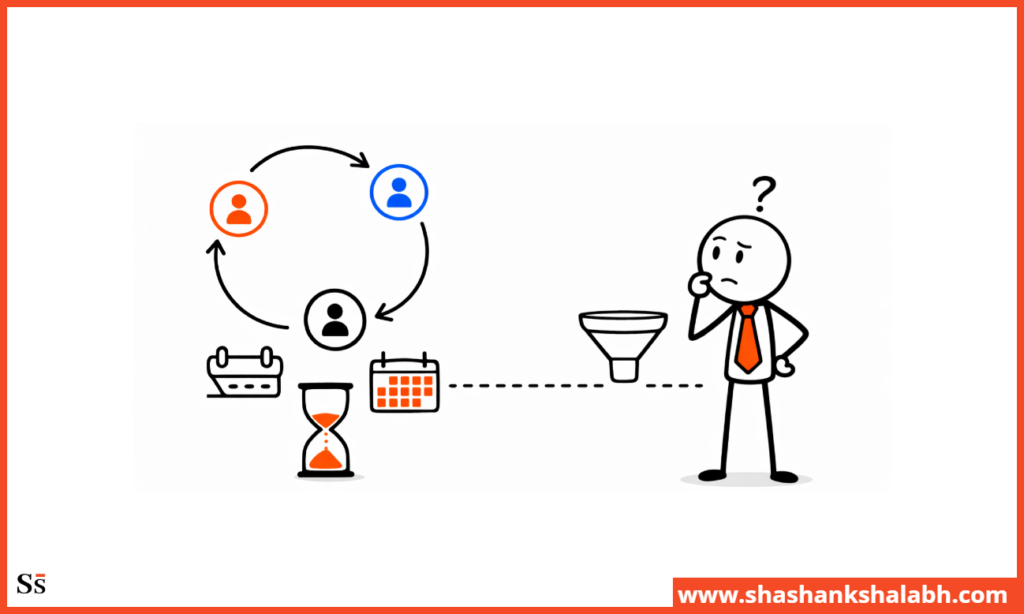
They send emails on a schedule. These sequences do provide value and stay top of mind. What they don’t do is move buyers from one stage of the funnel to the next.
Keeping a lead warm and advancing a lead toward a sales conversation are different jobs.
I have observed that businesses design their nurture programs for the first. Ideally, these programs need to be designed for the second.
What does this look like in practice?
Leads stay in nurture for months, sometimes three, six, even twelve months, without ever becoming an MQL or SQL.
On paper, the program looks healthy. Open rates are steady and unsubscribe rates are low.
But nothing is moving forward. The leads are not progressing. They are just sitting in the system.
What’s happening underneath?
The nurture sequence was built around content availability.
It reflects what content exists and what can be scheduled, not what the buyer actually needs.
It was not designed around the buyer journey, the questions buyers ask at each stage, or the information that would help them move toward a decision.
The sequence also ignores trigger events that create urgency and shift intent into action.
How to fix this?
Rebuild nurture sequences around two principles.
First, every email has one job. Move the buyer forward or remove them from the sequence. Move them or disqualify them.
Second, structure content around buying triggers and buyer questions.
A company that just raised Series A funding needs different messaging than a prospect who has been inactive for six months.
Segment based on real signals and trigger events, not how long someone has been in nurture.
You Don’t Have Enough Pipeline Coverage to See the Problem Clearly
This one is less obvious, but it’s frequently the reason companies can’t diagnose their lead-to-pipeline problem even when they know something is wrong.
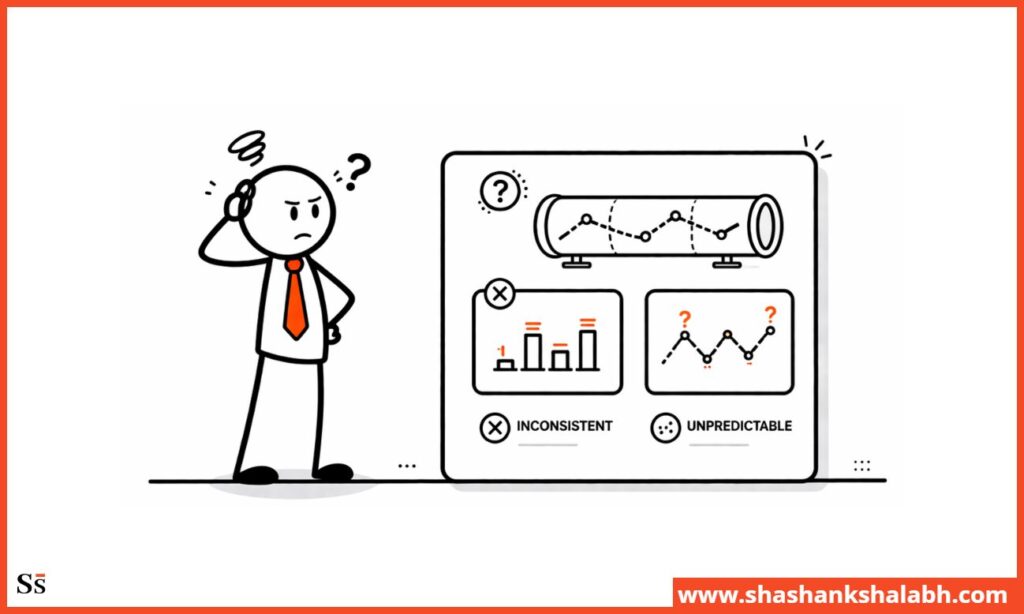
If total pipeline volume is thin, individual lead quality issues become statistically invisible.
With 12 MQLs per month, every conversion or non-conversion looks like a random event.
The sample size is too small to identify patterns. Every quarter feels unpredictable because there isn’t enough data to see what the system is doing.
What does this look like in practice?
Pipeline numbers feel random. Some months are good, some are bad, and nobody can explain why with confidence. The analysis changes every quarter.
What’s happening underneath?
There isn’t enough volume.
Conversion rate problems require sample sizes large enough to produce reliable data.
You need enough MQLs to see which ICP segments convert better, which channels produce better SQL rates, and which disqualification reasons appear most frequently.
With low volume, these patterns are invisible.
How to fix this?
Set a minimum 3:1 pipeline coverage ratio before diagnosing conversion problems.
This means having at least three dollars of qualified pipeline for every dollar of revenue target.
At this level of coverage, there is enough volume to see reliable patterns in conversion data.
Once that baseline is in place, it becomes clear where leads are converting, where they are dropping off, and what needs to be fixed.
How to Diagnose Which Problem Is Breaking Your System
The seven causes I talked about earlier rarely happen in isolation.
You will see that most businesses have two or three at the same time. The diagnostic below helps find the main problem.
The Five-Minute Diagnostic: Where Is the Drop-Off?
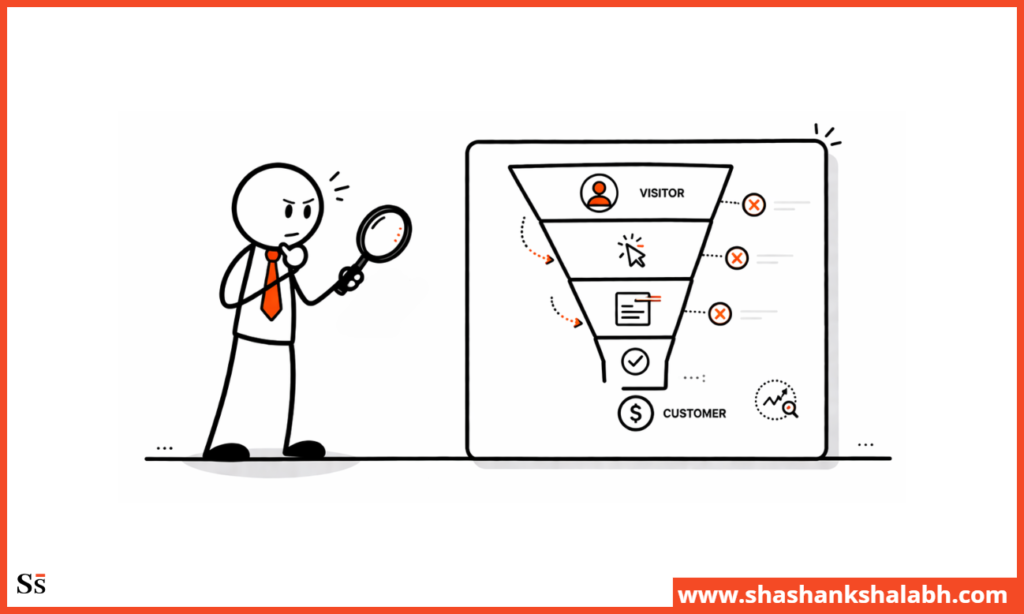
Map the funnel across six stages:
Visitor → Lead → MQL → SQL → Opportunity → Customer
For each stage transition, calculate the conversion rate.
- What % of visitors become leads?
- What % of leads become MQLs?
- What % of MQLs become SQLs?
The biggest drop-off in the funnel shows where the main problem is. The issue isn’t spread everywhere. It shows up in one specific stage, and that’s what you should focus on fixing.
If every stage has weak conversion, the problem is likely the ICP. You’re attracting the wrong people at the top of the funnel, and that mismatch gets worse as they move through.
If early stages look healthy but there’s a big drop from MQL to SQL, the issue is usually the definition, handoff, or lack of trust between teams.
And if the drop happens from SQL to opportunity, it’s more likely a positioning problem or how sales is handling the deal.
The Questions to Ask at Each Stage
Use these questions to identify the root cause at each transition:
| Funnel Stage | Key Questions | What to Check |
| Visitor → Lead | Is the message attracting the right audience? Are clicks coming from ICP-fit prospects or a broader audience? | Traffic sources, lead firmographics |
| Lead → MQL | Are the qualification criteria meaningful? Are MQLs actually ICP-fit or just engaged? | ICP match rate of MQLs |
| MQL → SQL | Is the handoff working? Are leads followed up within SLA or left untouched? | CRM: Time-to-first-contact, disqualification reasons |
| SQL → Opportunity | Is the sales conversation converting? Are prospects dropping after the first call or demo? | Discovery-to-opportunity rate, drop-off reasons |
| Opportunity → Customer | Are deals closing at expected rates? Is failure due to pricing, positioning, or execution? | Win/loss analysis |
The One Number That Reveals the Most
If only one metric can be checked first, check MQL-to-SQL conversion rate.
Benchmarks:
- 30-50%: Healthy for most B2B contexts. The system is working reasonably well
- 20-30%: Below benchmark. ICP or MQL definition needs review
- Below 20%: Significant problem. ICP mismatch, broken MQL definition, or handoff failure
- Below 10%: Multiple problems operating simultaneously – ICP, definition, and handoff all need diagnosis
During my conversations with both marketing leaders and sales folks, I hear “lead gen” as the most talked about issue in this context.
However, when I show them the numbers, they realize it’s conversion that’s the real problem.
What to Fix First
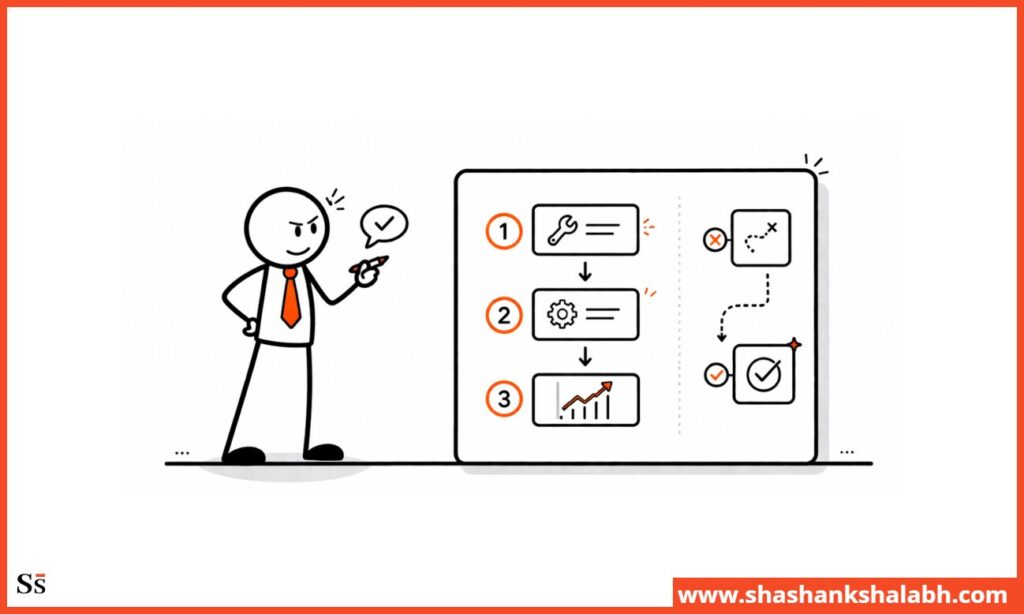
The seven issues I talked about earlier have a priority sequence. Fixing them out of order wastes time and budget.
Fix the ICP Before Fixing the Volume
I understand everyone (marketing and sales) complain about low lead volume.
But, in reality, more leads from the wrong ICP makes the problem worse.
Every bad-fit lead that enters the system consumes marketing budget, sales time, and CRM capacity. Generating more of them faster is the opposite of the fix.
Tighten the ICP first even if it temporarily reduces MQL volume.
A smaller number of right-fit leads converts faster and at higher rates than a large number of wrong-fit leads. The pipeline outcome will be better with fewer, better leads.
Fix the Definition Before Fixing the Process
If your MQL definition is off, everything after it is optimizing for the wrong outcome.
Sales gets the wrong leads, nurture keeps the wrong prospects engaged, and reporting tracks a metric that doesn’t drive pipeline.
Get marketing and sales aligned. Define MQL together, in writing, and fix that first. Until it’s right, any downstream improvements are wasted effort.
Fix the Handoff Before Investing in More Lead Gen
If the handoff is broken, more lead gen just creates more waste. More leads into a leaky system is a budget drain.
A clean handoff with fewer leads will outproduce a broken one with many. Document the process, set SLAs, and review it monthly. Don’t increase the spend until the handoff works.
Fix Alignment Before Scaling Spend
Sales-marketing misalignment makes every problem worse. A small, aligned team will beat a big, misaligned one.
Teams that get this right grow 50-80% faster with the same resources.
Alignment is a structural decision comprising shared definitions, shared data, and shared ownership of the MQL→SQL conversion. Fix that before you scale spend.
What a Working Lead-to-Pipeline System Looks Like
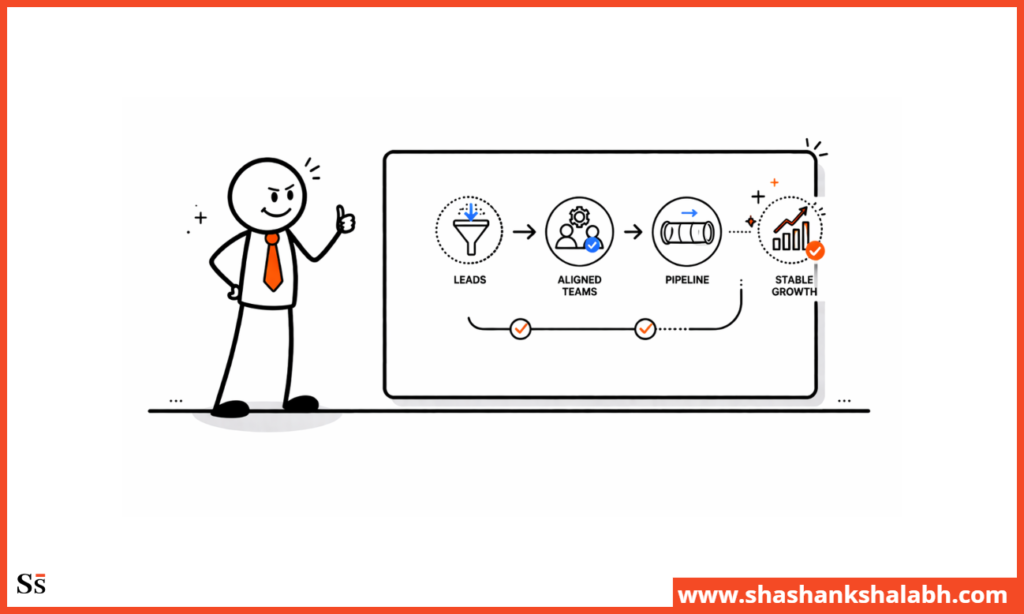
Fix the seven issues, and the system starts to show six clear traits. That’s your target.
ICP Built From Closed-Won Data
Your ICP isn’t a workshop persona.
It comes from your last 20 to 30 closed won customers. Look for the patterns that lead to fast conversion, reliable payment, and long retention.
Build your demand generation around that profile. Score every lead against it.
MQL Definition Agreed in Writing by Marketing and Sales
Your MQL definition should cover two things.
First, firmographic fit. The prospect matches your ICP.
Second, behavior. The prospect has shown real engagement.
Both teams agree to it in writing. Review it quarterly and update it when the data shows it’s off.
Handoff Protocol With SLAs
When a prospect becomes an MQL, the handoff is immediate and structured.
Marketing shares the ICP fit score, a short engagement summary, and a recommended outreach approach.
Sales commits to first contact within a set window, such as 24 hours for high scoring leads. Disqualification reasons are documented and reviewed together each month.
Joint Pipeline Review
Every week, marketing and sales review pipeline quality together.
Same data, same room, same conversation. They look at what converted, what was disqualified, and why.
Those disqualification insights feed straight into next week’s targeting.
Pipeline Coverage Ratio Tracked
Pipeline coverage is tracked monthly.
If it drops below 3:1, the focus is on building a more qualified pipeline. Once it’s at 3:1 or higher, the focus shifts to improving conversion and closing more of what’s already there.
One Owner for the Gap
Someone in the organization (CMO or fractional CMO) owns MQL to SQL conversion.
When that metric has a clear owner, it gets tracked, reported, and improved.
Without ownership, it stays invisible and the gap between leads and pipeline never closes.
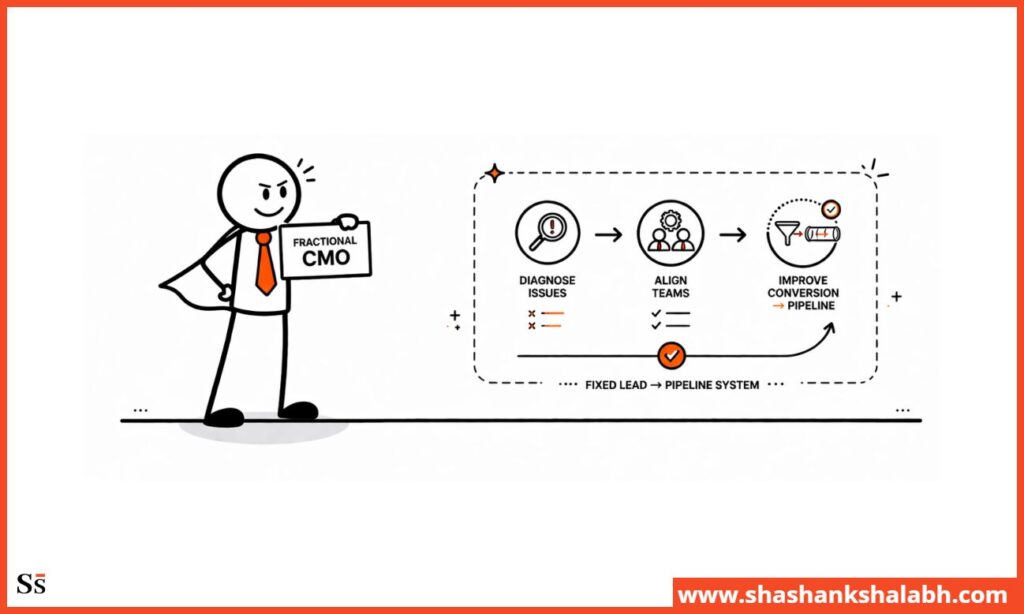
How a Fractional CMO Fixes This
The lead-to-pipeline gap requires executive-level authority to make changes across marketing and sales simultaneously.
The Diagnosis Comes First
Before suggesting any tactics, a fractional CMO maps the funnel to find where conversion is breaking.
Most companies want to fix lead gen by adding budget, testing channels, or hiring more marketers. But the real issue is often the ICP or the handoff. More leads into a broken system just creates more waste.
The diagnostic process usually takes 2 to 4 weeks. It includes MQL to SQL conversion analysis, review of disqualification reasons, an audit of the handoff, and a check on how well recent MQLs match the ICP.
The output is a clear diagnosis, the main constraint, and the order in which to fix it.
Building the Alignment Structure
A fractional CMO aligns marketing and sales at the executive level with the CEO and sales leadership.
Together they define the MQL, set the handoff process, and agree on a shared pipeline review cadence. That makes alignment part of how the business runs, not a marketing initiative sales can ignore.
This is the difference between a team trying to improve alignment and leadership building it into the operating model.
Owning the Conversion Metric
A fractional CMO owns MQL to SQL conversion, not just MQL volume. That shifts what gets measured, what gets reported to the board, and what gets fixed when performance slips.
When MQL to SQL conversion is a board-level metric with clear ownership, the whole system aligns around the right outcome. When no one owns it, it stays broken.
→ Fractional CMO Responsibilities → Fractional CMO Case Studies
FAQ: Why Your Lead Gen Isn’t Turning Into Pipeline
These questions and answers will help you quickly understand why your leads are not converting.
What is the difference between lead generation and pipeline?
Lead generation is about volume. It counts people who show interest through forms, downloads, ads, or events. Pipeline is about revenue. It includes qualified opportunities that sales has accepted.
The gap between them is MQL to SQL conversion.
What is a good MQL-to-SQL conversion rate?
A healthy MQL to SQL conversion rate is around 30-50% in the B2B domain. It depends on your ICP, deal size, and sales motion.
If it’s below 20%, it usually means your ICP is too broad, your MQL definition is too loose, or the sales handoff is not working. Below 10% means multiple problems are operating simultaneously.
Why does my sales team ignore marketing leads?
Sales teams stop using marketing leads when they’ve been burned by poor quality leads enough times.
This can be solved by improving the system. Build an MQL definition that includes firmographic fit sales actually trusts. Set up a shared pipeline review so both teams look at the same data. And make sure sales disqualification reasons feed directly into marketing targeting.
How do I fix the handoff between marketing and sales?
Fix the handoff with a clear written protocol.
Marketing provides an ICP fit score, an engagement summary, a recommended outreach approach, and any relevant context about the prospect.
Sales commits to timely follow up, usually within 24 hours for high scoring leads and 48 hours for standard ones. If a lead is disqualified, the reason is logged in the CRM and reviewed monthly by both teams.
This should be agreed on by marketing and sales leadership in writing.
When should I hire someone to fix my lead-to-pipeline conversion?
Bring in executive marketing leadership if the lead to pipeline problem has lasted more than two quarters without real improvement.
Internal fixes usually target symptoms like more leads, new channels, or sales training. They rarely fix the real issues, which are ICP, MQL definition, handoff, and alignment.
A fractional CMO focuses on those structural causes first and fixes them at the executive level across marketing and sales.
For companies at $3M to $20M in revenue, a fractional CMO at $10K to $25K per month provides that level of leadership without the cost of a full-time hire.
→ When to hire a Fractional CMO

Closing Thought: Lead Generations vs Pipeline
If leads are not turning into a pipeline, the problem is ICP, MQL definition, or the handoff between marketing and sales.
More budget in a broken system just creates more waste.
Note that more leads overwhelm sales. And more nurture just drags out deals that will not close.
Fix the system first, then scale.
Start with the ICP, then the MQL definition, then the handoff. Add a joint review rhythm. And make someone accountable for MQL to SQL conversion, not just lead volume.
When those pieces are in place, lead gen starts turning into a pipeline.
Check out Go-To-Market Strategy for Scaling Companies for the GTM system that prevents this problem from developing.
Also, explore Fractional CMO for Growth-Stage Companies to understand how a fractional CMO applies this fix at the executive level.

Shashank brings over 22 years of global omnichannel marketing experience. As a 4x Chief Marketing Officer, he has helped several organizations (Startups and Fortune 500) drive sustainable revenue growth through strategic marketing.