
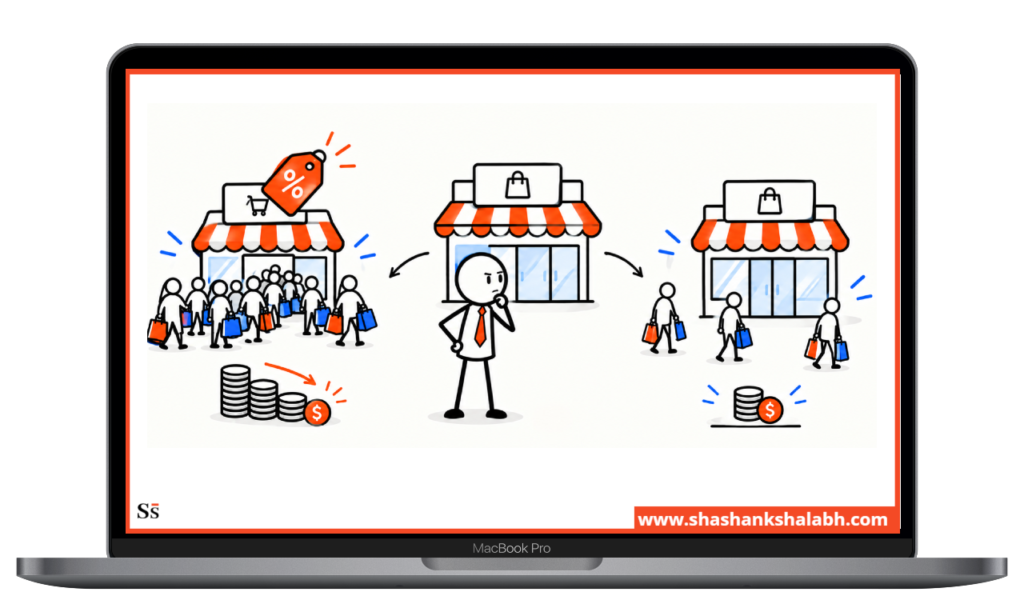
When a direct to consumer (DTC) brand runs a sale, revenue jumps. But once the sale ends and prices return to normal, sales often drop again.
Discounts can make your brand look like it’s growing while profits shrink and full-price demand fades.
More orders don’t always mean a healthier business. What matters is whether customers would still buy without a discount.
In this blog, I’ll show you how to spot the problems behind your ecommerce discount strategy.
I will also help you figure out whether the real issue is your positioning, pricing, product value, acquisition quality, or demand.
Discounting: Good & Bad?
In the direct to consumer ecommerce domain, discounts aren’t bad.
Used the right way, an ecommerce discount strategy can drive real business growth. The problem starts when they stop being a tool and become the strategy.
Discounts work best when they have a clear purpose. In other words, a good discount strategy should do more than generate orders.
Use them to launch a product, clear excess inventory, get new customers to try your brand, or support an acquisition campaign you can measure.
Watch for signs that discounts are becoming a habit
For example, sales rely on ecommerce promotions, full-price conversion stays low, and customers wait for the next sale.
Meanwhile, revenue grows, but profit takes a hit.
Again, I am not asking you to stop discounting. But make sure discounts bring in extra profitable sales rather than just getting customers to buy sooner for less.
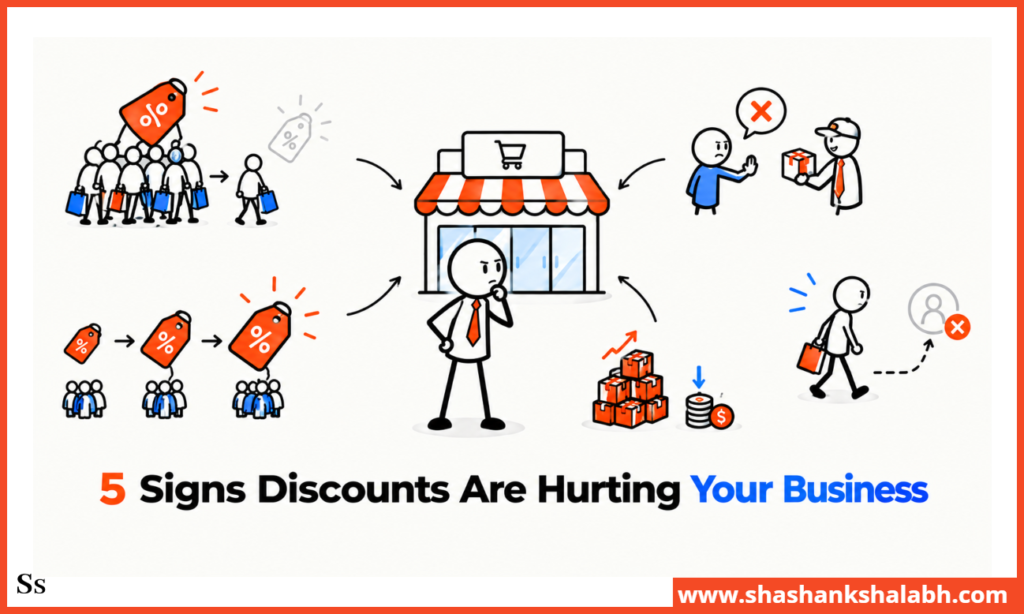
When Discounts Can Be An Issue
In direct to consumer ecommerce, I have observed that discounts can be detrimental in certain scenarios. Let me walk you through them.
Sales drop once the promotion ends
Compare sales during the ecommerce promotion with similar periods without one.
Account for seasonality, traffic, inventory, and ad spend. Then check whether the promotion drove new orders or simply moved purchases forward.
Customers rarely buy at full price
Track your full-price conversion rate and compare customers who saw an offer with those who didn’t.
If people only buy when there’s a discount, they may not see enough value in your product at its regular price.
You need bigger discounts to get the same results
If you’re running sales more often or offering bigger discounts to get the same response, something may be wearing out.
But price isn’t always the problem.
Competition, audience fatigue, or weaker demand could be the cause. Compare the extra orders and profit each campaign brings in to see if the discounts are still worth it.
Revenue Up Profit Down
Factor in every cost, including discounts, product costs, fulfillment, shipping subsidies, and returns. Then look at the profit you make per order and per customer.
Growing revenue is good, but it only matters if your profits grow too.
Discount customers don’t come back
Compare repeat purchase rates by discount and acquisition source.
Check whether customers came for the product or just the deal. Keep in mind that repurchase rates depend on the product. Some products naturally take longer to buy again.
→ Ecommerce Customer Retention
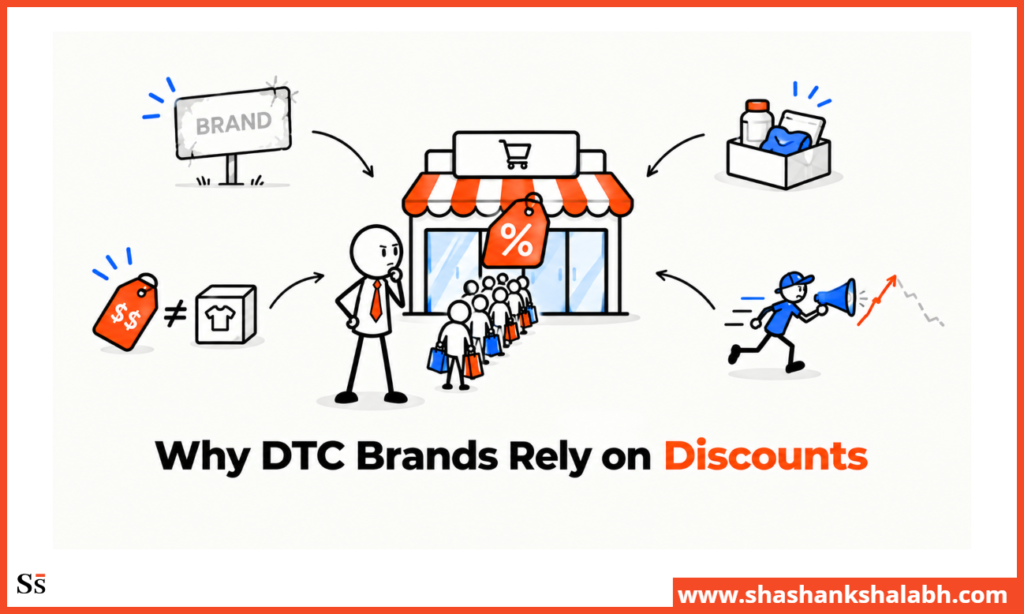
Why Direct to Consumer Brands Rely on Discounts
Most direct to consumer (DTC) brands don’t always start with discounts.
When something else does not work, they leverage discounts to cover it up.
I have worked with direct to consumer brands for over two decades as a marketing leader. And it usually boils down to four issues when it comes to discounting.
Weak Positioning
Weak positioning makes discounts the easiest thing to sell.
When your product doesn’t stand out, savings become the main selling point. Customers don’t see why it’s worth paying full price because your marketing hasn’t given them a clear reason.
Weak Offer
Broad ecommerce promotions attract deal hunters instead of your ideal customers. First-order numbers may look good, but repeat purchases often tell a different story.
Price-Value Mismatch
Customers don’t see enough value in the product to justify the price. The benefits may not be clear, the experience may fall short, or a competitor may give them a better reason to buy.
Marketing focuses on quick wins
When marketing at DTC brands focuses only on revenue, order volume, or ROAS, teams miss the bigger picture.
They don’t look at whether those sales would have happened anyway or how much profit they actually bring in. So whenever numbers dip, discounts become the go-to-solution.
Would They Still Buy Without the Discount?
I want you to focus on this as this is the most important section in the post.
Here’s how I’d work through it.
Set a fair baseline
Compare ecommerce promotion periods to comparable periods without one. Account for seasonality, media spend, product availability, and anything else that moves sales.
Count incremental orders
How many extra orders did the promotion create beyond what would have happened anyway? Where you can, use a holdout group, where a slice of customers doesn’t see the offer.
A simple before-and-after comparison can’t prove the cause.
Calculate contribution profit after the discount
When calculating profit, include net revenue after discounts and refunds, product costs, fulfillment and shipping, payment fees and other variable costs, plus any extra campaign costs from running the ecommerce promotion.
Look at what happens after the promotion
Do sales stay high or return to normal? Did customers buy sooner than they would have? Do they come back for another purchase? And are discounts taking sales away from full-price orders?
Analyze Results
Look at results by product, offer, customer group, channel, and new versus returning customers. Store-wide numbers can look healthy while certain segments lose money every time you run a promotion.
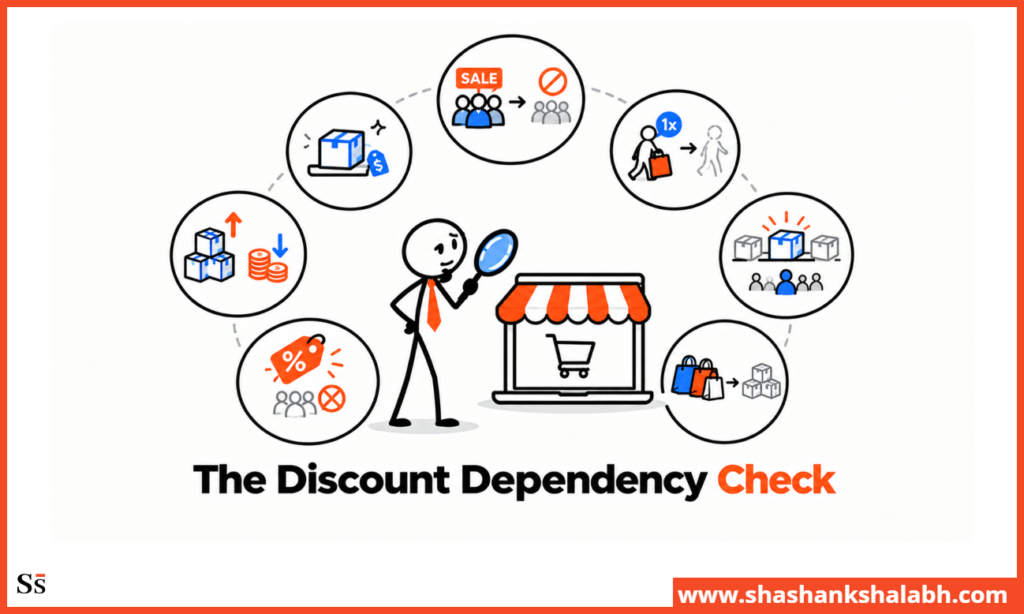
Is Your Direct To Consumer Brand Relying Too Much on Discount: The Discount Dependency Check
These signs can point to a deeper problem, but they don’t tell the whole story. Use them to figure out where to look next.
Sales drop as soon as the promotion ends
This suggests that customers may be buying early to take advantage of the deal rather than buying more overall. Look at post-promotion sales and whether demand recovers.
Full-price sales remain weak
It means customers may not see enough value to justify the regular price. Look at full-price conversion, customer feedback, and how clearly your product stands out.
Discounted customers don’t return
In this case, the offer may attract bargain hunters who aren’t a good fit for your brand. Look at repeat purchase rates by offer and acquisition source.
Revenue grows, but profit falls
This suggests discounts and other variable costs may be eating into your margins. Check contribution profit per order and per customer.
Bigger discounts bring the same results
Customers may be losing interest, or competition and demand may be changing. Analyze conversion by discount depth, campaign performance, and customer feedback.
Only certain products respond to discounts
The issue may be specific to a product’s pricing, positioning, or demand. Compare product-level conversion, full-price sales, and margins.
Orders rise, but total category sales don’t
Customers may be switching from other products or bringing forward purchases they would have made later. Examine incremental sales, category demand, and what happens after the ecommerce promotion.
How to Use Discounts Without Relying on Them?
You don’t need to stop offering discounts. Just understand when they work and when they’re covering up a bigger problem.
Before cutting prices again, get clear on who your product is for, what problem it solves, and why it’s worth the price.
Test bundles, product education, guarantees, or added value instead of relying on discounts. Give every ecommerce promotion a clear goal, target audience, time frame, budget, profitability target, and a way to measure its impact.
Keep acquisition offers separate from everyday pricing, and judge introductory discounts by whether those customers come back.
Most importantly, measure the extra profit each ecommerce promotion generates, not just the orders or revenue it brings in.

When It’s a Positioning or Pricing Problem
Sometimes the problem goes beyond campaign execution.
Look closer if full-price demand stays weak despite decent traffic, promotions become more frequent or deeper, customers struggle to see the product’s value, competitors win on perceived value, or discount-driven revenue grows faster than profit.
These signs don’t always point to a pricing problem. Poor merchandising, low conversion, inventory issues, or market changes can cause similar patterns.
Assess the real issue before changing your pricing strategy.
If ecommerce promotions, positioning, and profitability aren’t working together, a fractional CMO can help your ecommerce or DTC brand connect the dots and build a strategy that drives profitable growth.
FAQ: Direct to Consumer Ecommerce Discount Strategy
Here are a few important questions that can help you assess and improve your ecommerce discount strategy.
What is a Ecommerce discount strategy?
It’s a plan for when to offer discounts, why to offer them, and how much to take off. Every promotion should have a clear goal and a way to measure its impact on profit.
How often should an ecommerce brand offer discounts?
There’s no set rule. It depends on your margins, products, and customers. Just make sure people aren’t learning to wait for the next sale.
How do discounts affect profit margins?
Discounts leave you with less money per order. Add shipping subsidies and returns, and profits can shrink even more. Look at contribution profit, not just revenue.
How can DTC brands reduce dependence on discounts?
Start by making your product’s value clear. Improve your positioning, test better offers, and set clear rules for promotions. Keep an eye on full-price sales to see if things improve.
How do you measure whether a promotion generated incremental sales?
Compare sales against what you’d normally expect. If possible, use a group that didn’t receive the offer. Then check whether sales hold up after the ecommerce promotion ends.
Should ecommerce brands offer discounts to acquire new customers?
Sometimes. But don’t judge success by the first order alone. Look at whether those customers return and how much profit they bring over time.
How can a brand increase full-price sales?
Make it clear who the product is for, what makes it different, and why it’s worth the price. Improve your product pages and customer proof, then track whether more people buy without a discount.
Final Thoughts: Ecommerce Discount Strategy
I want to reiterate that you don’t need to eliminate discounts.
Instead, try to build a discount strategy that supports profitable growth instead of covering up problems with pricing, positioning, or demand.

Shashank brings over 22 years of global omnichannel marketing experience. As a 4x Chief Marketing Officer, he has helped several organizations (Startups and Fortune 500) drive sustainable revenue growth through strategic marketing.